Nikon D200: A Comprehensive Guide
Discover the Nikon D200’s full potential with readily available manuals, including the Nikon Manual Viewer 2 app for mobile access and detailed repair PDFs.
Released in 2005, the Nikon D200 quickly established itself as a powerful and versatile Digital SLR, bridging the gap between enthusiast and professional photographers. Its robust build quality, coupled with a high-resolution 10.2-megapixel sensor, delivered exceptional image detail and clarity. Understanding this camera’s capabilities is greatly enhanced by utilizing available resources, such as the comprehensive Nikon D200 user manual.
Fortunately, Nikon provides extensive documentation, including a downloadable PDF version of the manual, and the convenient Nikon Manual Viewer 2 application, accessible on both the App Store and Google Play. These resources are invaluable for both new and experienced users, offering detailed explanations of all camera functions and settings. Accessing repair manuals, like the Fefe2 Repair Manual (116 pages) and the Nikon d200 Repair Manual (109 pages), can also be beneficial for those comfortable with camera maintenance.
Key Features and Specifications
The Nikon D200 boasts a 10.2-megapixel DX-format CCD sensor, delivering images with impressive detail and dynamic range. It features a robust autofocus system with 11 focus points, ensuring sharp and accurate subject capture. The camera’s metering system offers multiple modes, including Matrix, Center-weighted, and Spot, providing flexibility in various lighting conditions.
Crucially, the D200 supports both RAW and JPEG image formats, allowing for extensive post-processing options. Its durable body is built to withstand demanding shooting environments. Detailed specifications and operational guidance are readily available within the official Nikon D200 manual, accessible through the Nikon Manual Viewer 2 app. Understanding these features, as outlined in the documentation, unlocks the camera’s full potential for photographers of all levels. Resources like repair manuals also detail internal components.

Understanding the D200’s Components
Explore the D200’s inner workings via detailed repair manuals and the Nikon Manual Viewer 2, gaining insight into its sensor, autofocus, and metering systems.
Sensor and Image Processor
Delving into the heart of the Nikon D200, the sensor and image processor are critical components. While specific details regarding the sensor’s intricacies aren’t explicitly detailed in the provided snippets, accessing the Nikon D200 user manual – conveniently available through the Nikon Manual Viewer 2 app on both the App Store and Google Play – will reveal comprehensive specifications.
These manuals outline the sensor’s resolution and type, crucial for understanding image quality. Furthermore, the documentation details the image processor’s role in handling data from the sensor, impacting noise reduction, color reproduction, and overall processing speed. Repair manuals, like the 116-page SPT January February 1971 document and the 109-page Nikon d200 Repair Manual, may offer deeper technical insights into these components, though they are geared towards service professionals; Understanding these elements is key to maximizing the D200’s photographic capabilities.
Autofocus System
The Nikon D200’s autofocus (AF) system, a cornerstone of its performance, is thoroughly documented within the official Nikon manuals. While the provided text doesn’t detail specific AF points or modes, the Nikon Manual Viewer 2 app – accessible via the App Store and Google Play – provides a complete overview.
Users can find detailed explanations of single-point AF, dynamic-area AF, and other modes, alongside instructions for customizing AF settings. Repair manuals, such as the Nikon d200 Repair Manual, might offer a technician’s perspective on the AF system’s mechanics. Mastering the AF system, as outlined in the user guide, is essential for capturing sharp, in-focus images, particularly when photographing moving subjects. Proper understanding ensures optimal performance and creative control.
Metering System
The Nikon D200’s metering system, crucial for accurate exposure, is comprehensively covered in the official Nikon documentation. Though the provided snippets don’t detail specific metering modes, the Nikon Manual Viewer 2 app (available on App Store and Google Play) offers a complete guide.
Users can access detailed explanations of matrix, center-weighted, and spot metering, alongside instructions for exposure compensation and metering lock. Repair manuals, like the Nikon d200 Repair Manual, may offer insights into the system’s hardware. Understanding the metering system, as detailed in the user manual, is vital for achieving correctly exposed images in various lighting conditions. Proper utilization ensures consistent results and creative control over image brightness.

Operating the Nikon D200
Master the D200’s functions using the Nikon Manual Viewer 2 app, accessing guides on settings, shooting modes, and menu navigation for optimal performance.
Basic Camera Settings
Understanding the foundational settings of the Nikon D200 is crucial for any photographer. The user manual, accessible through the Nikon Manual Viewer 2 app on both App Store and Google Play, details essential configurations. Begin with the image quality and size, selecting appropriate resolutions for your intended use – larger files offer more detail but require greater storage.
Next, familiarize yourself with the ISO settings, controlling the camera’s sensitivity to light; lower ISOs are ideal for bright conditions, while higher ISOs are necessary in low light, though they may introduce noise. The white balance setting ensures accurate color rendition, with presets for various lighting conditions and a custom option for precise adjustments. Don’t forget to set the date and time correctly for proper file organization. Finally, explore the autofocus settings to optimize sharpness and tracking performance, referencing the detailed explanations within the comprehensive Nikon D200 documentation.
Shooting Modes Explained
The Nikon D200 offers a versatile range of shooting modes, detailed within its user manual and accessible via the Nikon Manual Viewer 2 application. Auto mode simplifies operation for beginners, while Program Auto allows some control over ISO and white balance. Aperture Priority (A) lets you set the aperture for depth of field control, and Shutter Priority (S) controls motion blur.
Manual (M) mode provides full creative control over both aperture and shutter speed. Scene modes, like Portrait and Landscape, optimize settings for specific subjects. Explore the User Presets (P1, P2, P3) to save your preferred configurations for quick recall. Understanding these modes, as explained in the D200’s documentation, empowers you to capture images tailored to your artistic vision and shooting environment, maximizing the camera’s capabilities.
Navigating the Menu System
The Nikon D200’s menu system, thoroughly documented in the official Nikon manual and conveniently accessible through the Nikon Manual Viewer 2 app, is organized into several tabs: Setup, Shooting, Display, and Custom Settings. The Setup menu handles general camera settings like date/time and language. Shooting controls image quality, metering, and autofocus. Display adjusts the information shown on the LCD screen.
Custom Settings allows personalized adjustments to button functions and camera behavior. Utilize the multi-selector and buttons to navigate efficiently. Refer to the manual for detailed explanations of each option. Mastering the menu system, as detailed in the D200’s resources, unlocks the camera’s full potential and allows for precise control over its functions.
Advanced Features and Techniques
Explore customization options, white balance adjustments, and Picture Control settings, all detailed within the comprehensive Nikon D200 manual and app resources.
Customizing Camera Settings
The Nikon D200 offers extensive customization, empowering photographers to tailor the camera to their specific needs and shooting styles. The official Nikon D200 manual, accessible through the Nikon Manual Viewer 2 app on both App Store and Google Play, is crucial for navigating these options.
Users can delve into personalized menu settings, adjusting everything from autofocus behavior and metering modes to image quality parameters and display preferences. Understanding these settings, as outlined in the manual, allows for precise control over the camera’s performance. Detailed repair manuals, while focused on servicing, often illustrate the impact of various settings on image capture.
Furthermore, the manual guides users through creating and saving custom settings profiles, enabling quick recall of preferred configurations for different shooting scenarios. Mastering these customizations unlocks the D200’s full potential, transforming it from a capable camera into a highly personalized photographic tool.

Working with White Balance
Achieving accurate color rendition with the Nikon D200 relies heavily on mastering white balance. The comprehensive D200 manual, available via the Nikon Manual Viewer 2 app (iOS & Android), details various white balance settings, including Auto, Preset modes (like Daylight, Cloudy, Tungsten), and Custom settings.
Understanding how different light sources affect color temperature is key. The manual explains how to utilize the Custom White Balance function, allowing photographers to precisely calibrate color accuracy by referencing a white or gray card. Incorrect white balance can result in unwanted color casts, impacting image quality.
For complex lighting situations, the manual also covers fine-tuning white balance in post-processing. Referencing repair manuals can sometimes offer insights into the camera’s internal processing of white balance data, aiding in informed adjustments.
Utilizing Picture Control
Nikon’s Picture Control system, thoroughly explained in the D200’s manual and accessible through the Nikon Manual Viewer 2 app, allows photographers to customize image appearance directly within the camera. Standard, Neutral, Vivid, and Monochrome presets offer distinct starting points for color and contrast.
The manual details how to fine-tune each Picture Control, adjusting parameters like sharpness, contrast, brightness, saturation, and hue. Creating and saving custom Picture Controls enables consistent image styles across shoots. Understanding these settings is crucial for achieving desired aesthetic results without extensive post-processing.
Advanced users can explore Picture Control Utility software (referenced in some repair documentation) for even greater control and sharing of custom profiles. Mastering Picture Control streamlines workflow and enhances creative expression.
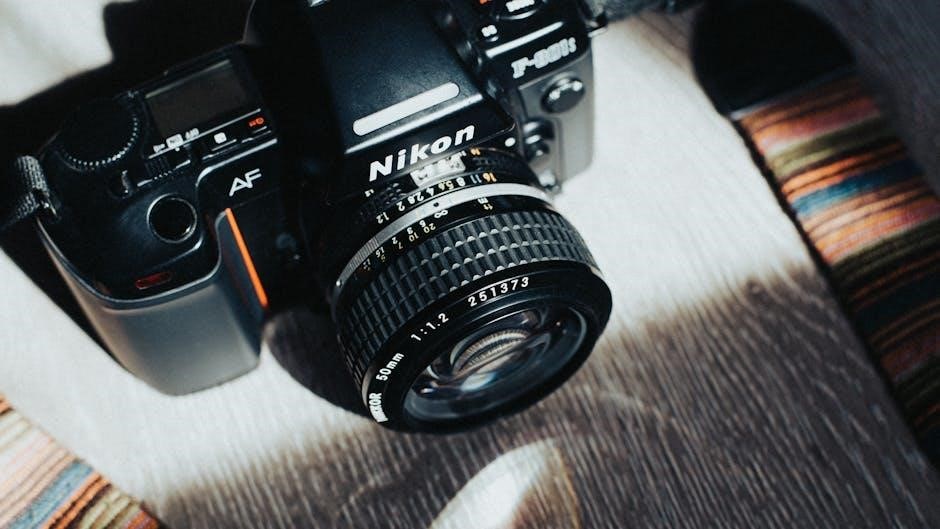
Maintenance and Troubleshooting
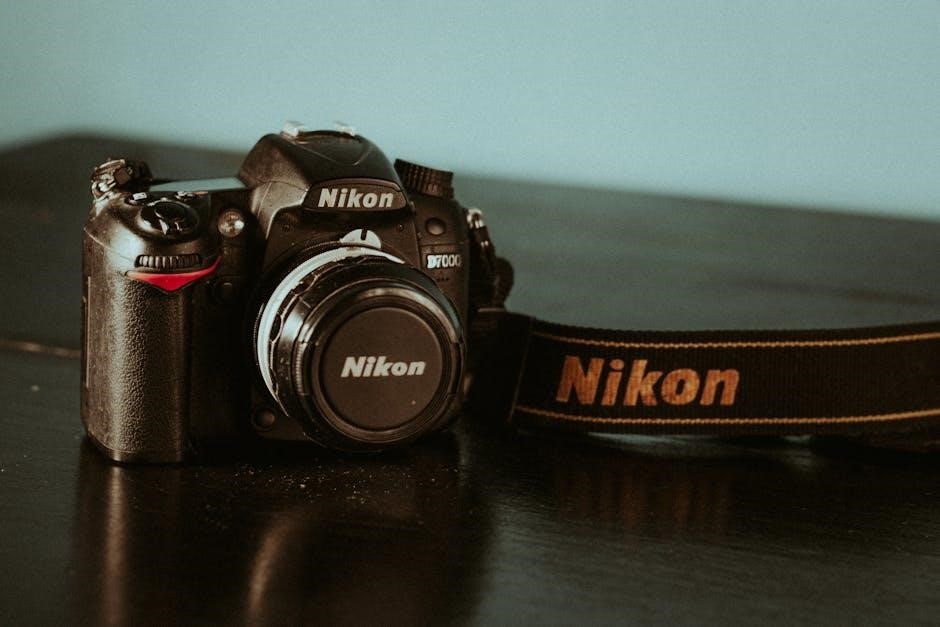
Refer to the Nikon D200 manual and online resources for cleaning guidance, common issue solutions, and instructions for essential firmware updates and repairs.
Cleaning and Care
Maintaining your Nikon D200 requires diligent cleaning to ensure optimal performance and longevity. The official Nikon D200 manual provides detailed instructions on proper camera care, emphasizing the use of approved Nikon cleaning supplies. Avoid abrasive cleaners or solvents, as these can damage the camera’s finish or internal components.
Regularly dust the camera body with a soft, dry cloth. For stubborn smudges on the LCD screen, use a microfiber cloth specifically designed for delicate surfaces. The sensor should be cleaned cautiously, ideally by a professional, but the manual outlines safe methods for using a blower to remove dust particles.
Pay close attention to the lens mount, ensuring it’s free of dust and debris. Inspect the battery compartment for corrosion and clean as needed. Proper storage in a dry, dust-free environment is also crucial for preventing damage. Always consult the manual for specific recommendations regarding cleaning different parts of the D200.
Common Issues and Solutions
The Nikon D200, while robust, can experience certain common issues. The detailed repair manuals, like the 116-page SPT January February 1971 document and the 109-page Nikon d200 Repair Manual, outline troubleshooting steps. A frequent concern is error messages; the official manual provides a comprehensive list and corresponding solutions.
Other potential problems include autofocus malfunctions, which may require recalibration as described in the manual. Image quality issues could stem from a dirty sensor, addressed in the cleaning section. Battery problems are also common; ensure proper charging and consider the optional MS-D200 battery pack.
If issues persist, consulting online forums and communities can offer peer support and solutions. Remember to always refer to the Nikon D200 manual before attempting any repairs, and consider professional service for complex problems.
Firmware Updates
Maintaining the latest firmware is crucial for optimal Nikon D200 performance. While the provided text doesn’t detail specific update procedures, the Nikon D200 manual itself will contain precise instructions on how to perform these updates. Firmware updates often address bugs, improve compatibility, and sometimes even add new features to the camera’s functionality.
It’s essential to carefully follow the steps outlined in the manual during the update process to avoid potentially bricking the camera. Always ensure a stable power source during the update, preferably using the AC adapter, and avoid interrupting the process.
Check the official Nikon website regularly for the newest firmware versions available for the D200. The manual will guide you to the correct resources for downloading and installing these critical updates, ensuring your camera operates at its best.

Accessories for the Nikon D200
Enhance your D200 experience with compatible DX NIKKOR lenses, optional battery grips like the MS-D200, and Nikon-approved power supplies.
Lenses Compatible with D200 (DX NIKKOR Series)
The Nikon D200, utilizing the Nikon DX format, is specifically designed for optimal performance with lenses from the DX NIKKOR series. These lenses are engineered to deliver exceptional image quality on cameras featuring an APS-C sensor, like the D200, providing a narrower field of view compared to their FX counterparts.
DX NIKKOR lenses offer a cost-effective and lightweight solution for D200 users, covering a wide range of focal lengths and applications. While FX NIKKOR lenses are also compatible, they will result in a 1.5x crop factor, effectively increasing the focal length. Exploring the DX NIKKOR range unlocks the full potential of the D200’s sensor, ensuring sharp, detailed images tailored for its format. Refer to Nikon documentation for a complete list of compatible lenses and their specifications.
Power Supplies and Battery Management (MS-D200)
Ensuring uninterrupted shooting with your Nikon D200 requires understanding its power options and battery management. The camera utilizes the MS-D200 battery, and Nikon recommends using only genuine Nikon accessories for optimal performance and safety. Consider acquiring an additional MS-D200 battery for extended shooting sessions, especially during travel or events.
Nikon also offers a dedicated network power adapter, providing a reliable power source when AC outlets are available. Proper battery care, as detailed in the D200’s manual, is crucial for maximizing its lifespan. Avoid extreme temperatures and fully discharging the battery frequently. Regularly check the battery indicator and charge when necessary to maintain peak performance and prevent unexpected interruptions during important moments.
Optional Camera Accessories
Enhance your Nikon D200 experience with a range of optional accessories designed to expand its capabilities. While the camera excels on its own, accessories can streamline workflows and unlock creative possibilities. Nikon specifically recommends utilizing only their branded accessories to guarantee compatibility and maintain camera warranty validity.
Consider accessories like remote shutter releases for precise control during long exposures or macro photography. External flash units can provide superior lighting for various shooting scenarios, while a high-quality camera bag offers protection during transport. Explore options like GPS modules for geotagging images and specialized filters to achieve unique effects. Refer to the D200 manual for a complete list of compatible accessories and detailed usage instructions.

Resources and Support
Access Nikon’s official resources, including the Nikon Manual Viewer 2 app, online forums, and detailed repair manuals for comprehensive D200 assistance.
Nikon Manual Viewer 2 (App Store & Google Play)
Enhance your Nikon D200 experience with the convenient Nikon Manual Viewer 2 application, freely downloadable from both the App Store and Google Play. This invaluable tool provides instant access to your camera’s user manual directly on your smartphone or tablet, eliminating the need to carry a physical copy.
Enjoy the flexibility of reviewing guides anytime, anywhere, whether you’re in the field shooting or planning your next photographic adventure. The app offers a user-friendly interface, allowing for easy navigation and quick reference to specific features and functions of the D200.
Benefit from having essential documentation readily available, ensuring you can maximize the capabilities of your camera and troubleshoot any issues that may arise. It’s a digital companion designed to support your photographic journey with the Nikon D200.
Online Forums and Communities
Unlock a wealth of knowledge and support by engaging with online forums and communities dedicated to the Nikon D200. These platforms serve as vibrant hubs where photographers of all levels share their experiences, tips, and troubleshooting advice.
Connect with fellow D200 users to discuss techniques, ask questions, and receive assistance with specific challenges you may encounter. Benefit from the collective wisdom of experienced photographers who have a deep understanding of the camera’s capabilities.
Discover valuable insights, learn new workflows, and stay updated on the latest firmware updates and accessories. These communities often provide access to user-created tutorials, sample images, and a supportive environment for enhancing your photographic skills with the Nikon D200.
Repair Manuals and Service Information
For those comfortable with camera repair, detailed service manuals for the Nikon D200 are available online. These comprehensive guides, often exceeding 100 pages, provide exploded diagrams and step-by-step instructions for disassembly, repair, and maintenance;
Access to these manuals allows experienced technicians or dedicated enthusiasts to diagnose and resolve complex issues, potentially saving on costly professional repairs. However, it’s crucial to possess the necessary skills and tools before attempting any internal repairs.
Resources include PDFs like the “Nikon d200 Repair Manual” (109 pages) and the “Fefe2 Repair Manual” (116 pages). Remember that working with sensitive electronic equipment requires caution and a thorough understanding of the camera’s internal components.