

Bates’ Guide test banks, specifically for the 12th and 13th editions, offer nursing students vital practice. These resources enhance foundational knowledge and clinical proficiency.
Nursing Mastery and DocMerit provide access to these question banks, simulating exam conditions and fostering critical thinking skills for effective patient care.
Overview of Bates’ Guide to Physical Examination and History Taking
Bates’ Guide to Physical Examination and History Taking, authored by Lynn S. Bickley, is a cornerstone textbook for healthcare professionals learning essential clinical skills. It meticulously details techniques for gathering patient histories and performing comprehensive physical assessments.
The guide emphasizes a systematic approach, covering everything from general observation to specialized examinations of individual body systems. It’s renowned for its clear explanations, detailed illustrations, and focus on evidence-based practice. Students utilize this guide to develop proficiency in vital signs assessment, neurological evaluations, and examinations of the HEENT, cardiovascular, respiratory, abdominal, and musculoskeletal systems.
The associated test banks, available for both the 12th and 13th editions, are designed to reinforce these concepts and prepare learners for academic and clinical challenges. They provide a robust tool for mastering the art and science of patient evaluation.
Importance of Test Banks for Learning
Test banks accompanying Bates’ Guide are invaluable learning tools for nursing and healthcare students. They move beyond simple memorization, actively promoting critical thinking skills essential for effective clinical practice. These resources offer comprehensive, rational questions mirroring exam formats, allowing students to assess their understanding and identify knowledge gaps.
By replicating the actual testing environment, test banks reduce exam anxiety and build confidence. They facilitate self-assessment, enabling learners to pinpoint areas requiring further study. Furthermore, the detailed rationales provided with each question deepen comprehension and reinforce core concepts.
Utilizing these test banks isn’t just about passing exams; it’s about developing the foundational knowledge and skills needed to deliver safe, effective, and evidence-based patient care.

Test Bank Content & Features
Bates’ Guide test banks feature diverse question types, detailed rationales, and a focus on critical thinking. They accurately replicate the exam experience.
Types of Questions Included
Bates’ Guide test banks encompass a wide array of question formats designed to comprehensively assess student understanding of physical examination and history-taking techniques. These include multiple-choice questions that test recall and application of knowledge, requiring students to select the most appropriate answer from a given set of options.
Furthermore, the banks incorporate scenario-based questions, presenting realistic clinical vignettes that challenge students to analyze patient presentations and determine the next best course of action. These scenarios often demand critical thinking and prioritization skills. Expect to encounter questions focusing on diagnostic reasoning, data interpretation, and appropriate physical examination maneuvers.
The question types also extend to those evaluating understanding of diverse population care and lifespan considerations, ensuring a holistic approach to patient assessment. These resources aim to prepare students for the complexities of real-world clinical practice.
Rationales and Explanations
A key feature of Bates’ Guide test banks is the inclusion of detailed rationales and explanations accompanying each question. These aren’t simply answer keys; they provide in-depth justifications for both correct and incorrect answer choices, fostering a deeper understanding of the underlying concepts.
These explanations delve into the physiological principles, clinical reasoning, and evidence-based practices that support the correct answer. Incorrect options are carefully dissected, highlighting the flaws in their logic and explaining why they are inappropriate in the given scenario.
This comprehensive approach allows students to learn from their mistakes and solidify their knowledge base. The rationales reinforce the importance of accurate data gathering, thoughtful interpretation, and informed decision-making in physical examination and history taking.
Focus on Critical Thinking Skills
Bates’ Guide test banks are meticulously designed to move beyond rote memorization, actively promoting critical thinking skills essential for competent healthcare professionals. Questions frequently present complex patient scenarios requiring students to analyze data, synthesize information, and apply their knowledge to realistic clinical situations.
These aren’t simply recall questions; they challenge students to prioritize findings, differentiate between normal and abnormal presentations, and formulate appropriate diagnostic and management plans. The test banks emphasize decision-making approaches and data gathering techniques.
By consistently engaging with these types of questions, students develop the ability to think critically, solve problems effectively, and provide safe, patient-centered care.
Replication of Exam Environment
Bates’ Guide test banks are purposefully structured to closely mirror the format and difficulty level of actual course examinations and, ultimately, professional certification assessments. This deliberate replication helps students acclimate to the testing environment, reducing anxiety and improving performance under pressure.
The question styles, ranging from multiple-choice to scenario-based analyses, are representative of those encountered in academic and clinical settings. Accessing these resources allows students to practice time management and refine their test-taking strategies.
Nursing Mastery specifically highlights this feature, emphasizing the ability to “replicate the actual test environment,” fostering confidence and preparedness for success.

Editions and Availability
Bates’ Guide test banks are currently available for both the 12th and 13th editions, accessible through platforms like Nursing Mastery and DocMerit.
Bates’ Guide 12th Edition Test Bank
The Bates’ Guide to Physical Examination and History Taking 12th Edition Test Bank, offered by Nursing Mastery, is a comprehensive resource designed to bolster student learning. This test bank provides a rich collection of exam-style questions, meticulously crafted with detailed rationales.
These questions are specifically tailored for healthcare and nursing students, focusing on evidence-based content. The primary goal is to equip students with the essential foundational knowledge and practical skills needed to confidently succeed in their coursework and, crucially, deliver safe and effective patient care.
Instant access to the complete PDF test bank allows students to sharpen their skills, accurately replicate the real exam environment, and significantly improve their critical thinking abilities. It’s a valuable tool for mastering the complexities of physical assessment and history taking.
Bates’ Guide 13th Edition Test Bank
The Bates’ Guide to Physical Examination and History Taking 13th Edition Test Bank, available through resources like DocMerit, focuses on advanced health assessment. This test bank provides comprehensive, rationale-rich questions applicable to physical examinations, with a special emphasis on crucial decision-making approaches.
It delves into diagnostics, effective data gathering techniques, and providing care for diverse patient populations. A key feature is its focus on managing and treating health disorders throughout the entire lifespan. Students can expect to find materials that streamline their learning process and facilitate success in their studies.
Instant access is a key benefit, eliminating waiting times and allowing students to focus solely on studying. This resource is designed to help students pass their classes with greater ease and confidence.
Accessing Test Banks: Nursing Mastery
Nursing Mastery serves as a dedicated platform for accessing the Bates’ Guide to Physical Examination and History Taking test banks, specifically the 12th Edition. They offer a PDF version of the Nursing Test Bank, created by Lynn S. Bickley, designed to equip healthcare and nursing students with essential knowledge.
The questions are evidence-based and exam-style, providing a realistic practice experience. Nursing Mastery emphasizes the importance of rationales, offering detailed explanations to reinforce understanding. This resource aims to sharpen skills, replicate the actual testing environment, and improve critical thinking abilities.
Students can instantly download the complete test bank, facilitating quick and convenient study. It’s a valuable tool for mastering classes efficiently and confidently, alongside other assessment and diagnostic test banks available on the site.
DocMerit as a Resource
DocMerit presents itself as a collaborative platform where students can both access and share study resources, notably including the Test Bank for Bates’ Guide to Physical Examination and History Taking, 13th Edition by Lynn Bickley. This resource offers comprehensive, rationale-rich questions focused on physical examinations.
The platform highlights a special emphasis on decision-making approaches, diagnostic techniques, data gathering, and care for diverse populations. DocMerit’s strength lies in its community-driven content, largely contributed by past students, offering insights from those who’ve recently navigated the course.
It provides complete downloads, eliminating wait times and allowing for immediate study. Students find DocMerit a valuable source for supplementing their learning and preparing for exams effectively.

Key Areas Covered in the Test Banks
Test banks comprehensively assess history taking, vital signs, general surveys, and HEENT examinations. Cardiovascular, respiratory, abdominal, neurological, musculoskeletal, and skin assessments are included.
History Taking Techniques
Bates’ Guide test banks heavily emphasize mastering effective history taking, a cornerstone of accurate diagnosis. Questions delve into techniques for eliciting patient narratives, focusing on chief complaints and histories of present illness.
Critical thinking is assessed through scenarios requiring students to differentiate relevant from irrelevant information. The test banks evaluate understanding of open-ended versus closed-ended questioning, and the importance of establishing rapport.
Rationales accompanying answers explain the significance of specific questions and how different responses impact diagnostic possibilities. Students are challenged to consider factors like cultural sensitivity and age-related variations when gathering patient histories.
Practice questions cover family history, social history, and medication reconciliation, ensuring a holistic approach to patient assessment. These resources prepare students for real-world clinical scenarios.

Vital Signs Assessment
Bates’ Guide test banks provide comprehensive evaluation of vital signs assessment skills, crucial for initial patient evaluation. Questions cover accurate measurement of temperature, pulse, respiration, and blood pressure, adhering to established protocols.
Critical thinking is applied through scenarios requiring interpretation of abnormal vital sign readings and their potential clinical significance. Students practice identifying factors influencing vital signs, such as age, activity level, and emotional state.
Rationales explain the physiological basis for normal ranges and the implications of deviations. The test banks assess understanding of appropriate techniques for different patient populations, including pediatric and geriatric patients.
Practice questions challenge students to prioritize interventions based on vital sign abnormalities and to recognize signs of clinical deterioration. These resources reinforce the importance of accurate documentation and timely reporting.
General Survey & Observation
Bates’ Guide test banks emphasize the importance of the general survey and observational skills in patient assessment. Questions focus on evaluating a patient’s overall appearance, level of consciousness, and signs of distress.
Critical thinking is stimulated through scenarios requiring students to interpret nonverbal cues and identify potential health problems based on observations. These include assessing nutritional status, hygiene, and emotional state.
Rationales explain the significance of various observations and their relevance to the patient’s medical history. The test banks assess understanding of cultural considerations impacting patient presentation.
Practice questions challenge students to differentiate between normal and abnormal findings, and to prioritize further assessment based on initial observations. Resources reinforce the importance of a systematic approach to the general survey.
Head, Eyes, Ears, Nose, and Throat (HEENT) Examination
Bates’ Guide test banks thoroughly assess understanding of the HEENT examination, crucial for identifying a wide range of conditions. Questions cover techniques for inspecting the skull, palpating for tenderness, and assessing cranial nerves.
Test bank content focuses on visual acuity testing, pupillary response, fundoscopic examination, and assessing extraocular movements. Students are challenged to differentiate normal from abnormal findings in the ears, nose, and throat.

Rationales explain the clinical significance of specific HEENT findings, linking them to potential diagnoses. Nursing Mastery and DocMerit resources emphasize proper technique and safety considerations.
Practice scenarios require students to interpret patient symptoms and prioritize appropriate diagnostic tests. The test banks reinforce the importance of a systematic HEENT assessment for comprehensive patient care.
Cardiovascular Examination
Bates’ Guide test banks provide extensive practice in cardiovascular assessment, a cornerstone of physical examination. Questions cover vital techniques like palpation for heaves and thrills, auscultation of heart sounds, and assessment of peripheral pulses.
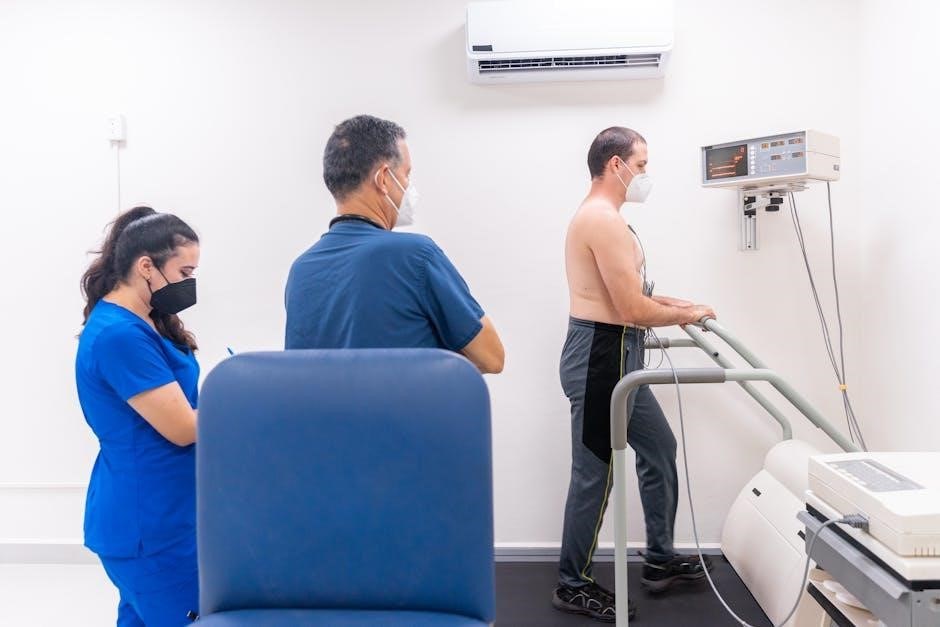
Test bank content challenges students to differentiate between normal and abnormal heart sounds, identify murmurs, and correlate findings with potential cardiac pathologies. Emphasis is placed on understanding the significance of blood pressure measurements.
Rationales explain the physiological basis of cardiovascular findings and their clinical implications. Resources from Nursing Mastery and DocMerit reinforce proper auscultation technique and accurate documentation.
Practice scenarios require students to interpret ECG findings and prioritize interventions based on cardiovascular assessment results, enhancing critical thinking skills for effective patient management.
Respiratory Examination
Bates’ Guide test banks thoroughly assess understanding of respiratory examination techniques. Questions focus on inspection for respiratory effort, palpation for tactile fremitus, percussion for resonance, and auscultation of breath sounds.
Test bank content challenges students to differentiate between normal and abnormal breath sounds – wheezes, crackles, rhonchi – and correlate them with specific respiratory conditions. Emphasis is placed on recognizing signs of respiratory distress.
Rationales explain the pathophysiology behind abnormal respiratory findings and their clinical significance. Resources from Nursing Mastery and DocMerit reinforce proper auscultation technique and accurate documentation.
Practice scenarios require students to interpret arterial blood gas results and prioritize interventions based on respiratory assessment findings, enhancing critical thinking for effective patient care.
Abdominal Examination
Bates’ Guide test banks comprehensively evaluate knowledge of abdominal examination procedures. Questions cover inspection for distension and pulsations, auscultation for bowel sounds, percussion for tympany and dullness, and palpation for organomegaly and tenderness.
Test bank scenarios challenge students to identify locations of referred pain and differentiate between various abdominal pathologies. Emphasis is placed on understanding the significance of rebound tenderness and guarding.
Rationales detail the anatomical basis for percussion findings and the physiological reasons for altered bowel sounds. Resources from Nursing Mastery and DocMerit reinforce proper palpation techniques.
Practice questions require students to interpret lab results related to liver function and pancreatic enzymes, linking assessment findings to diagnostic data for informed clinical decision-making.
Neurological Examination
Bates’ Guide test banks rigorously assess understanding of neurological examination techniques. Questions focus on evaluating mental status, cranial nerve function, motor strength, sensory perception, and reflexes.
Test bank scenarios present patients with diverse neurological deficits, requiring students to formulate appropriate assessment plans and interpret findings accurately. Emphasis is placed on differentiating upper and lower motor neuron lesions.
Rationales explain the neuroanatomical basis of specific neurological signs, such as clonus and Babinski’s reflex. Resources from Nursing Mastery and DocMerit reinforce proper testing procedures.
Practice questions challenge students to correlate neurological deficits with potential pathologies, including stroke, multiple sclerosis, and spinal cord injury, promoting diagnostic reasoning skills.
Musculoskeletal Examination
Bates’ Guide test banks comprehensively evaluate knowledge of musculoskeletal assessment. Questions cover inspection, palpation, range of motion, and assessment for tenderness, swelling, and deformity across all major joints.

Test bank scenarios present patients with conditions like arthritis, fractures, and muscle strains, challenging students to apply examination techniques and interpret findings accurately. Emphasis is placed on differentiating acute versus chronic musculoskeletal issues.
Rationales explain the significance of specific findings, such as crepitus and joint effusions. Resources from Nursing Mastery and DocMerit reinforce proper examination procedures.
Practice questions assess the ability to correlate musculoskeletal deficits with potential pathologies, enhancing diagnostic reasoning and clinical decision-making skills.
Skin Examination
Bates’ Guide test banks thoroughly assess understanding of dermatological examination techniques. Questions focus on inspecting skin lesions, assessing pigmentation, evaluating turgor, and identifying common skin conditions like rashes, ulcers, and nevi.
Test bank scenarios present diverse patient cases with dermatological concerns, requiring students to differentiate between benign and potentially malignant lesions. Emphasis is placed on accurate lesion description – size, shape, color, and borders.
Rationales clarify the clinical significance of skin findings, such as the ABCDEs of melanoma. Resources from Nursing Mastery and DocMerit reinforce proper assessment procedures.
Practice questions evaluate the ability to correlate skin changes with underlying systemic diseases, enhancing diagnostic reasoning and clinical skills.

Utilizing Test Banks Effectively
Test banks from Nursing Mastery and DocMerit are ideal for self-assessment, identifying knowledge gaps, and improving clinical skills through focused practice.
Self-Assessment and Identifying Weaknesses

Utilizing Bates’ Guide test banks provides a powerful method for students to gauge their understanding of physical examination and history-taking techniques. By working through the comprehensive questions offered by resources like Nursing Mastery and DocMerit, learners can pinpoint specific areas where their knowledge is strong and, crucially, where further study is needed.
The rationales accompanying each question are invaluable; they don’t just reveal the correct answer, but explain why it’s correct, illuminating the underlying principles. This process helps students move beyond rote memorization and develop a deeper, more conceptual grasp of the material. Identifying weaknesses early allows for targeted review, maximizing study efficiency and building a solid foundation for clinical practice.
Consistent self-assessment with these test banks fosters a proactive learning approach, empowering students to take ownership of their education and prepare effectively for course exams and future patient encounters.
Practice for Course Exams
Bates’ Guide test banks are meticulously designed to mirror the style and content of typical course examinations. Resources like Nursing Mastery offer exam-style practice questions, allowing students to familiarize themselves with the format and difficulty level they can expect. This exposure significantly reduces test anxiety and boosts confidence.
The comprehensive nature of these test banks, covering all key areas from history taking to neurological assessments, ensures thorough preparation. Regularly utilizing these resources, and reviewing the detailed rationales provided, reinforces learning and solidifies understanding.
Furthermore, platforms like DocMerit provide access to questions contributed by past students, offering a diverse range of practice scenarios. Consistent practice with these test banks is a proven strategy for achieving success on course exams and mastering the material.
Improving Clinical Skills
Bates’ Guide test banks extend beyond rote memorization, actively cultivating crucial clinical skills. The rationales accompanying each question encourage students to analyze why an answer is correct or incorrect, fostering critical thinking essential for real-world patient care.
By simulating clinical scenarios, these resources help students apply theoretical knowledge to practical situations. Nursing Mastery’s test bank, for example, emphasizes decision-making approaches and data gathering – skills vital for accurate assessments.
Consistent engagement with these materials, alongside practical experience, builds confidence and competence. Resources like DocMerit offer diverse perspectives, enhancing problem-solving abilities. Ultimately, utilizing these test banks prepares students to deliver safe, effective, and evidence-based care.