

2002 Ford Explorer Fuse Box Guide ⎯ Article Plan
This guide details fuse box locations, diagrams, and troubleshooting for the 2002 Ford Explorer, covering 4․0L and 4․6L engines․
Navigating the electrical system of your 2002 Ford Explorer can seem daunting, but understanding its fuse box layout is crucial for maintaining optimal vehicle performance․ This comprehensive guide aims to demystify the fuse box system, providing clear information on locations, diagrams, and troubleshooting techniques․ Electrical issues are common, and knowing how to identify and resolve them can save you time and money on repairs․
We’ll explore both the under-dashboard and engine compartment fuse boxes, detailing the function of common fuses like those for power windows, the radio, and the ignition system․ Accurate fuse diagrams are essential, and we’ll guide you through decoding them effectively․ This resource will empower you to confidently address electrical concerns in your 2002 Explorer․
Understanding Fuse Boxes in Your 2002 Ford Explorer
Your 2002 Ford Explorer utilizes multiple fuse boxes to protect its intricate electrical circuits․ These boxes contain fuses – vital safety devices designed to break the circuit when overloaded, preventing damage to wiring and components․ Typically, you’ll find a primary fuse box located under the dashboard, easily accessible for interior components․ A secondary fuse box resides within the engine compartment, safeguarding systems like the starter and fuel pump․
Each fuse corresponds to a specific circuit, and understanding this relationship is key․ The fuse box isn’t just a collection of fuses; it’s a central hub for electrical distribution․ Identifying the correct fuse box and interpreting its diagram are the first steps in diagnosing and resolving electrical issues within your Explorer․
Importance of a Fuse Box Diagram
A fuse box diagram is absolutely essential for any electrical work on your 2002 Ford Explorer․ Without it, identifying the correct fuse for a specific component becomes a frustrating and potentially damaging guessing game․ These diagrams illustrate the location of each fuse and, crucially, what circuit it protects – power windows, radio, interior lights, and more․
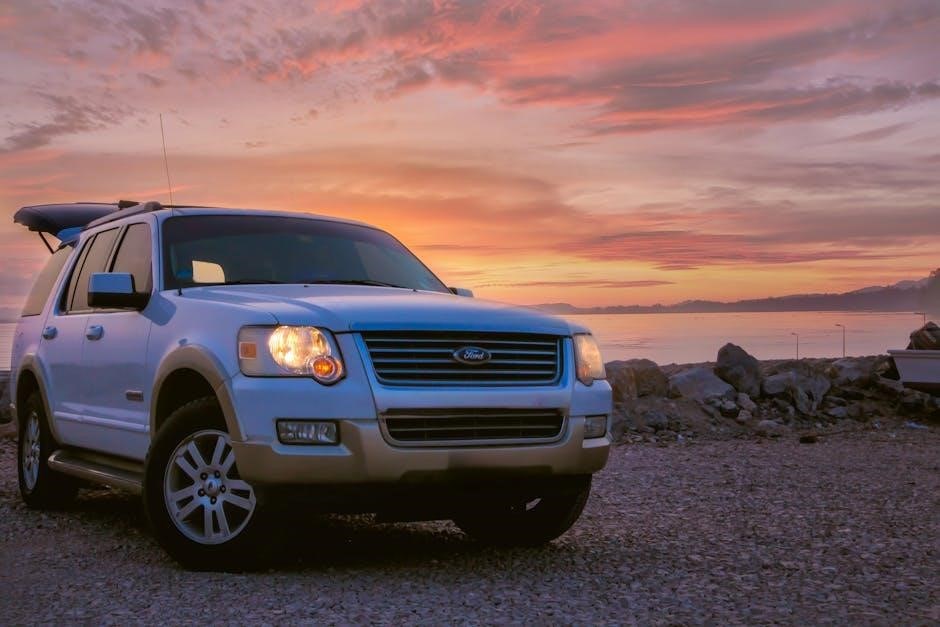
Attempting repairs without a diagram risks blowing the wrong fuse, potentially causing further electrical problems or even disabling critical systems․ Online databases and your owner’s manual provide these diagrams․ Accurate interpretation prevents misdiagnosis and ensures you’re addressing the root cause of the electrical issue, saving time and preventing costly repairs․

Fuse Box Locations
The 2002 Ford Explorer features two primary fuse box locations: one under the dashboard and another within the engine compartment for easier access․
Under-Dashboard Fuse Box
Located conveniently for interior component protection, the under-dashboard fuse box in your 2002 Ford Explorer houses fuses controlling essential systems․ These include power windows, the radio/audio system, interior lighting, and potentially some aspects of the ignition system․ Accessing this fuse box typically involves locating a panel on the driver’s side, often near the steering column or under the dash itself․
Carefully remove the panel to reveal the fuses․ The fuse box cover should have a diagram illustrating the function of each fuse․ This diagram is crucial for identifying the correct fuse before attempting any replacement․ Remember to consult reliable sources, like the owner’s manual or online databases, to confirm fuse assignments and amperage ratings․
Engine Compartment Fuse Box
Positioned for safeguarding critical engine and chassis systems, the engine compartment fuse box in a 2002 Ford Explorer typically resides under the hood, often near the battery․ This box protects components like the windshield wipers, ignition systems, and various engine control modules․ Locating it usually involves identifying a black plastic box with a removable lid․
Always disconnect the negative battery terminal before working within the engine compartment fuse box to prevent accidental shorts․ Like the under-dashboard box, the lid should feature a fuse diagram․ Referencing this diagram, alongside the owner’s manual or online resources, is vital for correct fuse identification and replacement․ Ensure you use the specified amperage fuse for each circuit․
Identifying the Correct Fuse Box
The 2002 Ford Explorer generally features two fuse box locations: under the dashboard and within the engine compartment․ Determining which box contains the fuse for a specific issue is crucial․ Interior accessories, like the radio and interior lights, are typically controlled by the under-dashboard fuse box․ Conversely, engine-related components, such as the windshield wipers and ignition system, are usually protected by the engine compartment fuse box․
Consulting a fuse box diagram is essential․ These diagrams, often found on the fuse box lids themselves or within the owner’s manual, clearly illustrate which fuses control which circuits․ If unsure, start by checking the under-dashboard box for interior issues and the engine compartment box for exterior or engine-related problems․
Decoding the Fuse Box Diagram
Understanding fuse diagram symbols, relay locations, and circuit numbers is key to successfully navigating the 2002 Ford Explorer’s electrical system․
Reading Fuse Diagram Symbols
Deciphering the symbols on a 2002 Ford Explorer fuse box diagram is crucial for accurate identification․ Typically, each fuse is represented by a small rectangle, often with a number indicating its amperage․ Relays, larger components, are also depicted with specific symbols, differing from fuses in appearance․
Circuit numbers are often printed near the corresponding fuse or relay, providing a direct link to the system it protects․ These numbers correlate with the vehicle’s wiring schematics․ Pay close attention to any accompanying legends or keys on the diagram, as these explain the meaning of various icons and abbreviations․ Understanding these symbols allows for quick and efficient troubleshooting of electrical issues within your Explorer․
Understanding Relay Locations
Relays, unlike fuses, are electromechanical switches controlling higher-current circuits in your 2002 Ford Explorer․ They’re often found alongside fuses within the under-dashboard and engine compartment fuse boxes․ Identifying relay locations requires careful examination of the fuse box diagram․
Relays are typically labeled with numbers or abbreviations corresponding to the systems they control – for example, fuel pump, cooling fan, or headlights․ The diagram will illustrate the specific slot for each relay․ Remember that relays are larger than fuses and have multiple pins․ Correctly identifying and understanding relay locations is vital for diagnosing and repairing complex electrical problems, ensuring proper vehicle functionality․
Identifying Circuit Numbers
Each circuit protected by a fuse or relay in your 2002 Ford Explorer is assigned a unique circuit number․ These numbers are crucial for tracing electrical issues and understanding which components are connected․ The fuse box diagram is the key to deciphering these numbers; it clearly maps each fuse/relay slot to its corresponding circuit․
Circuit numbers often correlate to specific vehicle systems – for instance, a number might represent the power windows, radio, or interior lights․ Referencing your owner’s manual alongside the fuse box diagram will help you understand what each circuit powers․ Accurate identification of circuit numbers streamlines troubleshooting, allowing for targeted repairs and preventing unnecessary component checks․

Common Fuses and Their Functions
Frequently blown fuses in the 2002 Explorer include those for power windows, the radio/audio system, interior lighting, wipers, and the ignition system․
Power Window Fuse
The power window fuse protects the electrical circuit controlling your 2002 Ford Explorer’s power windows․ A blown fuse will prevent all or some windows from operating․ Typically, this fuse is located within the under-dashboard fuse box, though specific placement varies․ Identifying the correct fuse requires consulting a fuse box diagram – often found in the owner’s manual or online databases․
Common amperage ratings for the power window fuse are 20 or 30 amps․ Replacing a blown fuse with one of the correct amperage is crucial; using a higher amperage fuse can cause significant electrical damage․ If the fuse blows repeatedly, it indicates a short circuit within the window motor, wiring, or switch, requiring professional diagnosis and repair․
Radio/Audio System Fuse
The radio/audio system fuse safeguards the electrical components powering your 2002 Ford Explorer’s sound system․ A blown fuse results in a non-functional radio, speakers, and potentially, the CD player or auxiliary inputs․ This fuse is commonly situated in either the under-dashboard or engine compartment fuse box, depending on the vehicle’s configuration․ Accurate identification necessitates referencing a detailed fuse box diagram, accessible through the owner’s manual or reliable online resources․
Typical amperage ratings for the radio fuse range from 10 to 15 amps․ Always replace a blown fuse with one of the identical amperage to prevent further electrical issues․ Recurring fuse failures suggest a short circuit within the audio system wiring or components, demanding professional inspection and repair to avoid potential hazards․
Interior Lighting Fuse
The interior lighting fuse controls all cabin lights within your 2002 Ford Explorer, including dome lights, map lights, and potentially, vanity mirror lights․ A blown fuse will cause these lights to cease functioning, impacting visibility inside the vehicle, especially during nighttime driving․ This fuse is typically located within the under-dashboard fuse box, though consulting a specific fuse diagram is crucial for accurate identification․
Amperage for the interior lighting fuse generally falls between 5 and 10 amps․ Replacing a blown fuse requires using an identical amperage rating to avoid damaging the electrical system․ Frequent fuse blows indicate a potential short circuit within the lighting circuits or a faulty light fixture, necessitating professional diagnosis and repair for safe operation․
Windshield Wiper Fuse
The windshield wiper fuse is critical for the operation of your 2002 Ford Explorer’s wipers and washers, ensuring clear visibility during inclement weather․ A blown fuse will render the wipers inoperable, significantly reducing driving safety in rain, snow, or when the windshield is dirty․ This fuse is commonly found within the engine compartment fuse box, but verifying with a fuse box diagram is essential․
Typically, the windshield wiper fuse ranges from 15 to 20 amps, depending on the specific Explorer configuration․ Always replace a blown fuse with one of the exact same amperage to prevent electrical damage․ Recurring fuse failures suggest a problem with the wiper motor, wiring, or washer pump, requiring professional inspection and repair to restore functionality and safety․
Ignition System Fuse

The ignition system fuse in your 2002 Ford Explorer is a vital component, protecting the electrical circuits responsible for starting and running the engine․ A blown ignition fuse will prevent the engine from starting, leaving you stranded․ This fuse is usually located in either the under-dashboard or engine compartment fuse box; consulting a diagram is crucial for accurate identification․
Typically, the ignition system fuse is rated between 10 and 20 amps, depending on the engine type (4․0L or 4․6L) and specific Explorer model․ Replacing it with an incorrect amperage can cause severe damage to the ignition system․ Frequent blowing indicates a deeper issue, such as a faulty ignition switch, starter motor, or wiring problem, necessitating a professional diagnosis and repair․

Troubleshooting Fuse Issues
Diagnosing fuse problems involves identifying blown fuses, proper replacement procedures, and ensuring the correct amperage is used to avoid further electrical damage․
Identifying a Blown Fuse
Determining if a fuse is blown is a crucial first step in resolving electrical issues․ Visually inspect the fuse; a blown fuse typically exhibits a broken filament or a dark, scorched appearance within the clear plastic casing․
Carefully remove the fuse using a fuse puller (often located within the fuse box) or needle-nose pliers․ A good fuse will have an intact metal strip connecting the terminals․ If the strip is broken, the fuse is faulty and needs replacement․
Sometimes, visual inspection isn’t enough․ A multimeter can be used to test for continuity across the fuse terminals; a blown fuse will show no continuity․ Always consult the fuse box diagram to confirm the fuse’s function before testing or replacing it․
Fuse Replacement Procedure
Replacing a blown fuse is a straightforward process, but safety is paramount․ First, ensure the ignition is switched off to prevent short circuits․ Locate the blown fuse using the fuse box diagram and carefully remove it with a fuse puller or pliers․
Next, obtain a replacement fuse with the exact same amperage rating․ Using a fuse with a higher amperage can cause severe electrical damage․ Insert the new fuse firmly into the slot․
If the replacement fuse blows immediately, it indicates a more significant underlying electrical problem that requires professional diagnosis․ Do not repeatedly replace fuses without addressing the root cause of the issue․
Using the Correct Fuse Amperage
Selecting the correct fuse amperage is crucial for protecting your 2002 Ford Explorer’s electrical system․ Never substitute a fuse with a higher amperage rating than specified in the fuse box diagram․ A higher amperage fuse can allow excessive current to flow, potentially damaging wiring and components․
Conversely, using a fuse with a lower amperage will likely cause it to blow prematurely, even if there isn’t a genuine fault․ Always refer to the fuse box diagram to identify the correct amperage for each circuit․
If unsure, consult a qualified mechanic to avoid electrical damage and ensure safe operation of your vehicle’s systems․

Specific 2002 Ford Explorer Fuse Diagrams
Detailed diagrams are provided for both the 4․0L and 4․6L engines, alongside a comprehensive interior fuse layout, aiding precise identification․
4․0L Engine Fuse Diagram
For 2002 Ford Explorers equipped with the 4․0L engine, the fuse box diagram reveals critical circuit protection details․ This diagram illustrates the location of fuses governing essential systems like the fuel pump, ignition coil, and various sensors․ Understanding this layout is crucial for diagnosing and resolving electrical issues efficiently․ Key fuses to note include those for the PCM (Powertrain Control Module), EEC relay, and the anti-theft system․
Referencing a detailed diagram ensures correct fuse identification and amperage ratings; Incorrect fuse replacement can lead to further electrical problems or even damage to sensitive components․ Online databases and repair manuals offer accessible versions of this specific 4․0L engine fuse box diagram, simplifying the troubleshooting process for owners and mechanics alike․
4․6L Engine Fuse Diagram
The 2002 Ford Explorer with the 4;6L engine utilizes a distinct fuse box diagram compared to the 4․0L variant․ This diagram details the specific fuses responsible for powering systems like the variable valve timing (VVT) system, the electronic throttle control, and the engine cooling fan․ Locating the correct diagram is paramount for accurate troubleshooting․ Key fuses include those protecting the fuel injectors, the mass airflow sensor, and the oxygen sensors․
Always consult a reliable source for the 4․6L fuse box layout, as variations may exist․ Online fuse databases and the Ford owner’s manual provide accessible diagrams․ Proper fuse identification and amperage matching are vital to prevent electrical damage and ensure optimal engine performance․ Incorrect replacement can cause significant issues․
Detailed Interior Fuse Layout
The under-dashboard fuse box in a 2002 Ford Explorer houses fuses controlling numerous interior components․ This includes the power windows, door locks, interior lighting, and the radio/audio system; A detailed layout reveals specific fuse positions for features like the cigarette lighter, the anti-lock braking system (ABS), and the instrument cluster illumination․ Understanding this layout is crucial for addressing interior electrical issues․
Carefully examine the fuse box cover for a printed diagram, though these can become faded over time․ Online resources and repair manuals offer clearer, more detailed depictions․ Correctly identifying the fuse associated with a malfunctioning component prevents unnecessary troubleshooting and ensures a swift repair․ Always use the specified amperage fuse for each circuit․

Resources for Fuse Box Information
Access online databases, Ford’s owner’s manual, and repair manuals for comprehensive 2002 Explorer fuse box diagrams and troubleshooting guidance․
Online Fuse Box Databases
Numerous websites specialize in automotive fuse box diagrams, offering valuable resources for 2002 Ford Explorer owners․ Sites like fuse-box․info provide detailed schematics, pinpointing fuse and relay locations for various Explorer configurations․ These databases often categorize information by model year and engine type (4․0L or 4․6L), ensuring accuracy․
Users can typically find interactive diagrams, allowing them to click on specific fuses to reveal their corresponding circuit functions․ These online resources are particularly helpful when a physical owner’s manual is unavailable or incomplete․ However, always cross-reference information with a reliable source, like a Ford repair manual, to confirm accuracy before performing any electrical work․ Remember that diagrams can vary slightly based on vehicle options and production dates․
Ford Owner’s Manual
The original 2002 Ford Explorer owner’s manual is an invaluable resource for fuse box information․ It typically includes dedicated sections detailing fuse box locations – both under the dashboard and within the engine compartment – along with comprehensive fuse diagrams․ These diagrams illustrate the arrangement of fuses and relays, clearly labeling each circuit’s function․
The manual also specifies the correct amperage rating for each fuse, crucial for preventing electrical damage․ While online databases offer convenience, the owner’s manual provides factory-specific details tailored to your exact vehicle configuration․ If you’ve misplaced your manual, consider purchasing a replacement from Ford or exploring online sources offering downloadable versions․ Always prioritize the information found within your vehicle’s original documentation․
Repair Manuals and Guides
Comprehensive repair manuals, like Haynes or Chilton, offer detailed 2002 Ford Explorer fuse box information beyond the owner’s manual․ These guides provide expanded fuse diagrams, often including wiring schematics that trace circuit paths․ They’re particularly helpful for diagnosing complex electrical issues and understanding relay operation․
Repair manuals often feature step-by-step instructions for fuse replacement and troubleshooting, catering to both novice and experienced DIY mechanics․ They may also include information on body computer connections and system interactions․ While these manuals require a purchase, the depth of information can save significant time and money compared to relying solely on online resources or a dealership․ Look for manuals specifically covering the 2002 Explorer model year for accurate details․

Preventative Maintenance
Regular fuse box inspections and avoiding electrical overloads are crucial․ Address frequent fuse blows promptly to prevent further damage and ensure safety․
Fuse Box Inspection Schedule
Establishing a routine inspection schedule for your 2002 Ford Explorer’s fuse boxes is paramount for maintaining optimal electrical system performance․ A visual check should be performed at least every six months, or more frequently if you notice any unusual electrical behavior․ During inspection, look for signs of corrosion on the fuse terminals, loose connections, or any physical damage to the fuse box itself․
Pay close attention to fuses that have been previously blown and replaced; repeated failures indicate a potential underlying issue․ It’s also wise to inspect the fuse box after any significant weather event, such as flooding or heavy rain, as moisture can contribute to corrosion and electrical problems․ Documenting your inspection dates and findings can help track potential issues over time and facilitate more effective troubleshooting․
Protecting Against Electrical Overloads
Preventing electrical overloads in your 2002 Ford Explorer is crucial for safeguarding the fuse box and overall electrical system․ Avoid overloading circuits by refraining from connecting too many high-wattage accessories to a single circuit, such as multiple devices to the cigarette lighter or accessory outlets․
Ensure all aftermarket accessories are professionally installed with appropriate wiring and fusing to prevent drawing excessive current․ Regularly check wiring for damage, such as frayed insulation or loose connections, which can create resistance and generate heat, potentially leading to an overload․ Using the correct fuse amperage is vital; never substitute a higher amperage fuse for a blown one, as this bypasses the safety mechanism and increases the risk of fire․
Dealing with Frequent Fuse Blows
Repeatedly blown fuses in your 2002 Ford Explorer signal an underlying electrical issue demanding investigation․ Don’t simply replace fuses continuously; this masks the root cause and risks further damage․ A consistently blowing fuse indicates a short circuit or an overloaded circuit drawing excessive current․
Carefully inspect the wiring and components associated with the affected circuit for damage, such as frayed wires, corroded connectors, or malfunctioning accessories․ If the problem persists, consult a qualified mechanic to diagnose and repair the issue․ Ignoring frequent fuse blows can lead to more extensive and costly repairs, potentially even a fire hazard․ Prioritize safety and professional assistance․